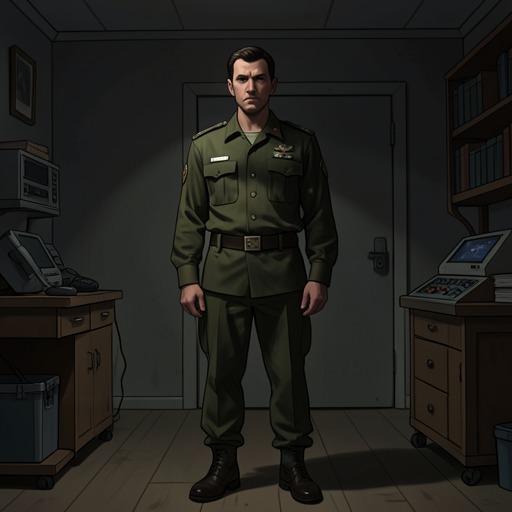
Fidelis’s heart failure
The Master Butchers Singing ClubFidelis’s heart failure is a long-hidden illness that finally overcomes him at the New York customs gate, exposing the limits of the strength on which he has built his identity. The novel traces the disease through earlier family and wartime losses, his determination to deny his body’s needs, and Delphine’s growing recognition that his condition is serious. His collapse reverses his familiar role as a butcher who performs death’s necessary work: at the arrival gate, Fidelis becomes the person who cannot rise or speak, while Delphine is left beside him as witness and caretaker.
Identity and Background
The illness has been developing for years before Fidelis recognizes it. In New York, the narration connects its first intimations to the time Markus marched past his father in the Minnesota woods and chose a gated prison house. The separation registers in Fidelis as an early sign of the weakening disease that would eventually obstruct and destroy his heart. Later, news of Franz’s injury and the letter reporting Emil’s death bring further emotional blows; Fidelis tears up the papers, and the narration links his sense of heartbreak to the physical illness that is advancing within him.
The disease therefore arrives neither as a sudden misfortune nor as a condition Fidelis has been willing to name. His account of himself is shaped by strength and endurance, while the illness develops gradually beyond his awareness and control. Its history is interwoven with family separation and loss, but the narration distinguishes the bodily disease from the emotional shocks through which its first signs become apparent.
Warning Signs in Germany
During the visit to Ludwigsruhe, intended to be a long-delayed honeymoon, Fidelis suffers mysterious pains on the journey. An X-ray reveals an enlarged liver and a threatened heart. The physical warning stands in contrast to the hospitality surrounding the couple: relatives arrange picnics, camping trips, forest hikes, dinners, and handmade gifts, while Delphine struggles with the language and with her isolation among her husband’s family. The visit is generous and welcoming, but it is not the easy holiday they had planned.
Delphine sees that Fidelis’s illness is not simply a discomfort that can be set aside. In her final letter from Europe to North Dakota, she tells Markus that Fidelis is not well and suggests that a doctor examine him. She also asks Markus to watch the new help and report when they arrive at work, as though trying to make provisions for the household while the couple remains away. Her concern gives the illness a practical consequence before Fidelis himself accepts it: someone else must notice, speak, and plan around what he is concealing.
Denial and the Return Crossing
Fidelis refuses the news that he is ill. To someone accustomed to strength, weakness feels like a lie, and he ignores his body’s needs, maintaining old habits as if they could restore his former power. His denial is not presented as evidence that the disease is slight; it is the response that allows its progression to remain unacknowledged even as his physical capacity diminishes.
On the ocean crossing and after, exhaustion becomes impossible to dismiss. Fidelis sleeps for twelve or fourteen hours at a stretch and naps in the afternoons, yet the tiredness grows beyond his control. By the time he steps from the USS Bremen into the crowd in New York, his lungs are tight and aching. He still smokes a Turkish cigarette bought in Germany and waits in the customs line, shuffling behind Delphine. The ordinary business of arrival continues around him while his body can no longer sustain the strength he expects of it.
The return also gathers earlier memories into the present. Waiting in the customs line recalls his first arrival and his father at the sausage kettle, lifting links through the steam with disciplined steadiness. The memory of inherited craft and bodily strength meets Fidelis’s present exhaustion. The days that once seemed separate and predictable collapse into one another, as the past and the failing present converge at the gate.
Collapse and Narrative Significance
At the customs gate, Fidelis drops his cigarette and becomes disoriented by the floor and the light. He imagines himself moving forward, then realizes he has not moved. The episode ends the distinction between the work of slaughter he has carried out throughout his life and the death he has previously served: now, he understands, it is his turn. The arrival gate is not a killing chute, but the comparison makes clear that he cannot meet this crisis through the role he knows.
His heart seizes, and he falls. Delphine bends over him and speaks, but Fidelis cannot answer; his mouth and hands no longer obey him, and the light and the singing that had filled his perception fade. His collapse makes visible what his denial had kept from view and transfers the immediate burden of response to Delphine. Across the episode, the novel contrasts Fidelis’s practiced control with the helplessness of illness, and the butcher who once carried out death’s work with the vulnerable man who must now be helped by another.